
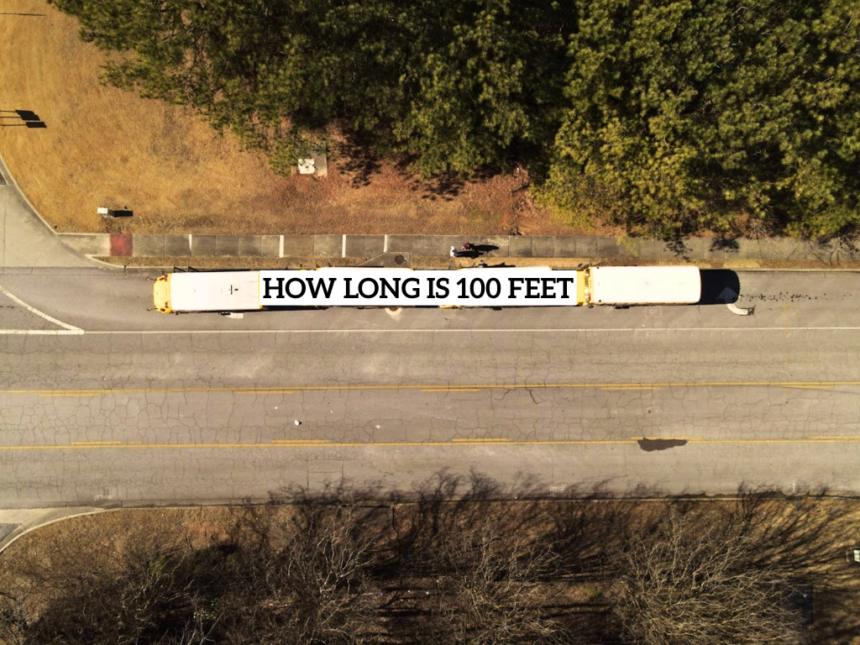
How Long Is 100 Feet is a common question for people who want to understand the actual size of this measurement. Numbers can sometimes be difficult to imagine without a real-life comparison. By connecting measurements with familiar objects, buildings, sports areas, and daily experiences, it becomes easier to understand the true length.
- Understanding the Basic Measurement
- Comparing 100 Feet With Everyday Objects
- Understanding the Height of 100 Feet
- Sports Comparisons for Better Visualization
- Walking Distance and Human Steps
- Natural Examples of 100 Feet
- Uses in Construction and Planning
- History of the Foot Measurement
- Age, Family, Height, Net Worth, and Social Media Information
- Why Understanding Measurements Matters
- Final Thoughts
- FAQs
This measurement is used in many fields, including construction, architecture, property planning, sports, and outdoor design. Learning about this distance helps people estimate spaces and understand the size of different areas more clearly.
Understanding the Basic Measurement
To understand How Long Is 100 Feet, it is important to know the value of a foot. A foot is a standard unit of length that is commonly used in countries like the United States. One foot equals 12 inches, which means 100 feet equals 1,200 inches.
When converted into meters, this distance is approximately 30.48 meters. It is also equal to about 33.33 yards. This makes it a useful measurement for many practical purposes, especially when planning spaces or measuring outdoor areas.
Although the number may appear simple, the actual distance is larger than many people expect. Standing at one end and looking toward the other side gives a better understanding of its size.
Comparing 100 Feet With Everyday Objects
Many people search How Long Is 100 Feet because they want a simple way to visualize the distance. One of the easiest comparisons is a basketball court. A standard basketball court is around 94 feet long, meaning this measurement is slightly longer than the full court.
A person walking from one end of a basketball court and continuing a few extra steps would travel close to this distance. This comparison helps people understand that 100 feet is not a small space.
It can also be compared with large gardens, driveways, and outdoor areas. Many homes with spacious properties may have areas that extend close to this length.
Understanding the Height of 100 Feet
The measurement can also describe height, not just distance. A building around 100 feet tall may be similar to an eight- or ten-story building, depending on the design and floor height.
Standing near a structure of this size can feel impressive because it rises far above normal human height. Many commercial buildings and apartment structures can reach a similar height.
Nature also provides examples. Some tall trees can grow around this height, allowing people to understand how large natural objects can become.
Sports Comparisons for Better Visualization
Sports fields are another useful way to understand measurements. An American football field is about 300 feet long, so 100 feet represents roughly one-third of the field.
A soccer field is usually longer than this measurement, although sizes can vary. A 100-foot section would cover only part of the playing area.
These examples make measurements easier to understand because many people are already familiar with the size of sports fields and courts.
Walking Distance and Human Steps
Another way to understand How Long Is 100 Feet is by thinking about walking. Most adults can walk this distance in around 20 to 30 seconds at a normal pace.
The number of steps depends on a person’s height and walking style. On average, a person may need around 40 to 50 steps to cover this distance.
This makes the measurement useful for planning walking paths, gardens, outdoor spaces, and property layouts.
Natural Examples of 100 Feet
Nature provides some impressive comparisons for understanding this measurement. Some of the largest animals on Earth, including blue whales, can reach lengths close to or greater than 100 feet.
This shows how enormous these creatures are compared with everyday objects. Large trees can also help people imagine this size, as some mature trees reach similar heights.
Natural comparisons are helpful because they turn a simple number into something people can picture.
Uses in Construction and Planning
Builders, engineers, and architects often use this measurement when designing structures. It can help determine the size of buildings, fences, roads, gardens, and other outdoor projects.
For homeowners, knowing How Long Is 100 Feet can be helpful when planning improvements. It may assist with decisions about driveway lengths, garden designs, or property boundaries.
Accurate measurements are important because they help avoid mistakes and ensure projects are completed correctly.
History of the Foot Measurement
The foot measurement has been used for thousands of years. Ancient people often used body-based measurements because they were simple and easy to apply.
Different cultures created their own versions of the foot, but modern measurement standards have made the value consistent. Today, one international foot equals exactly 0.3048 meters.
Although many countries use meters today, feet are still widely used in construction, aviation, and real estate industries.
Age, Family, Height, Net Worth, and Social Media Information
Unlike a celebrity or public figure, How Long Is 100 Feet is not a person. It is a measurement concept used to explain distance and size.
Because it is not a human profile, there is no age, family information, siblings, physical appearance, height, lifestyle, net worth, or social media account connected with it.
The purpose of this topic is education and understanding. It helps people learn how distance works and how measurements relate to the real world.
Why Understanding Measurements Matters
Measurements are an important part of everyday life. People use them when buying furniture, designing homes, building structures, and planning outdoor spaces.
Understanding distance helps people make better decisions. Students, homeowners, designers, and builders all benefit from knowing how measurements translate into real-life sizes.
Using comparisons with familiar objects makes learning easier and more practical.
Final Thoughts
How Long Is 100 Feet is more than just a simple measurement question. It helps people understand space by comparing numbers with basketball courts, buildings, walking distances, sports fields, and natural examples.
A distance of 100 feet is large enough to be important in planning and construction but still easy for a person to walk within a short time.
By learning measurements through real-world examples, people can develop a clearer understanding of size and distance. This knowledge is useful for education, work, and everyday activities.
FAQs
Q: How Long Is 100 Feet in meters?
A: 100 feet equals about 30.48 meters in the metric system.
Q: How Long Is 100 Feet compared to a basketball court?
A: 100 feet is slightly longer than a standard basketball court, which is about 94 feet long.
Q: How many steps does it take to walk 100 feet?
A: Most people need around 40 to 50 steps to walk 100 feet, depending on stride length.
Q: How tall is a 100-foot building?
A: A 100-foot building is usually around 8 to 10 stories high, depending on floor design.
Q: Why is understanding How Long Is 100 Feet useful?
A: Knowing this distance helps with construction, planning, design, and visualizing real-world spaces.